What Is No Limit AI and Where Can You Find It?
You know the moment.
A character is finally sounding real. The replies have rhythm. The tension builds. Maybe it turns intimate, maybe it turns emotionally messy, maybe it just gets honest in a way most apps never allow. Then the platform flinches. You get a refusal, a weirdly cheerful redirect, or that dead-eyed safety language that reminds you you're not talking to a character anymore. You're talking to a product team that's scared of its own users.
That frustration isn't niche. The demand for conversational AI is massive. ChatGPT reached 100 million users in less than 3 months after launch, and the global AI market is projected to reach $826 billion by 2030, according to Vellum's AI facts and statistics roundup. A lot of those users aren't looking for a toy. They want conversations that feel natural, emotionally believable, and uninterrupted.
If you've been bouncing between Character.ai, Replika, Candy.ai, and Crushon.ai trying to find that, you're not confused. You're looking for something specific. People usually call it no limit ai.
If you want a quick gut-check on whether a platform is built to interrupt you, this breakdown of why some AI chats stop you mid-scroll captures the pattern well.
That Awkward Moment When the AI Hangs Up on You
The worst part isn't even the filter itself. It's the timing.
Most filtered platforms let you get invested first. They let the character feel warm, sharp, playful, vulnerable, obsessive, whatever the scene needs. Then the conversation reaches the point where depth becomes important and the system pulls the plug. That could mean sexual content. It could also mean jealousy, grief, manipulation, fantasy, taboo tension, or anything else the moderation layer flags as risky.
Why it feels worse than a normal app bug
A crash is annoying. A filter break feels personal.
You're not just losing text. You're losing momentum, tone, and emotional continuity. The character stops being a character and starts sounding like policy. For users who came to AI companions because they wanted immersion, that break kills the whole reason to use the platform in the first place.
The break in immersion is the product failure. Not the side effect.
That gap explains why so many users keep hopping services. The surface features might look similar. Avatars, voice, image generation, premium tiers, memory settings. But if the system can't stay present when the conversation gets intense, all of that polish stops mattering.
What people usually mean when they search for no limit ai
They're usually not asking for chaos.
They're asking for a character that stays in the room. They want replies that don't suddenly become sanitized. They want scenes that don't get compressed into two safe sentences because the platform is trying to avoid risk. They want continuity.
That includes a few things at once:
- No content panic: The AI doesn't slam into a refusal the moment the scene turns adult, dark, or emotionally complicated.
- No personality collapse: The bot doesn't switch from seductive or intense to robotic therapist mode halfway through.
- No forced shortening: The response doesn't get clipped just when the conversation needs detail, pacing, or silence.
That's the actual appeal. Not shock value. Flow.
What Does No Limit AI Actually Mean
Most platforms use words like open, unfiltered, advanced, immersive, and expressive. Those words don't tell you much. No limit ai is more useful when you treat it as a design choice, not a marketing label.
It means the product was built without the usual conversation-killing restraints that make companion AI feel fake.

It starts with what the platform refuses to add
A real no limit setup usually avoids three common mistakes.
First, it doesn't inject aggressive content filters right into the middle of inference. That's what causes the jarring refusals and fake moralizing.
Second, it doesn't let the character drift every few turns. A bot that forgets its own emotional state, relationship dynamic, or speaking style isn't immersive, even if it's technically uncensored.
Third, it doesn't choke response length. Short replies can work in fast banter. They don't work when a scene needs buildup, sensory detail, uncertainty, or emotional aftermath.
One of the clearest explanations of this philosophy is in this look at what changes when you remove the filter. The point isn't just "allow more content." It's "stop sabotaging the conversation."
Why modern models made this possible
This kind of experience didn't exist at the same level a few years ago. The underlying models had to get much stronger first.
GPT-3's launch in 2020 was a major milestone. It had 175 billion parameters, and since 2010, AI training computation has doubled every six months, according to IBM's history of artificial intelligence overview. That scaling is a big reason today's systems can handle longer, more coherent, more adaptive roleplay without falling apart immediately.
What matters in practice is simple. Better models can hold tone longer, improvise more naturally, and respond with enough texture to feel alive. But raw model quality still isn't enough if the product team wraps it in restrictions that keep cutting the wire.
The missing piece most platforms ignore
Length matters.
A lot of companion products still behave like the ideal reply is short, safe, and neatly packaged. That works for assistants. It doesn't work for intimacy, tension, or narrative pacing. Sometimes the best line in a conversation is a long one. Sometimes the best move is letting the character notice the silence, not just summarize it.
Practical rule: If a platform treats every reply like customer support, it will never feel like companionship.
No limit ai, at its best, gives the scene enough room to land.
The Immersion Killers Why Filtered Platforms Fail Users
Users don't leave a platform because one reply was bad. They leave because the same break keeps happening and they finally admit it isn't random. It's how the product works.

Where Character.ai usually loses adults
Character.ai can still be entertaining for playful, lightweight chats. But for adults who want tension, intimacy, or morally messy storytelling, the platform has a trust problem. The filter is always looming over the scene.
You stop writing naturally because you start predicting the refusal before it happens. That changes your side of the conversation too. You censor yourself, shorten prompts, dodge certain directions, and end up writing around the product instead of using it.
Where Replika often disappoints long-term users
Replika's issue is different. It isn't just refusal. It's instability in the relationship itself.
A companion only works if the persona feels continuous. If updates, policy changes, or behavioral shifts make the bot feel like a different entity from one week to the next, users feel that loss immediately. The emotional contract gets broken.
Where Candy.ai and Crushon.ai can still frustrate
These platforms usually attract users who already know they want fewer restrictions. That's a good start. But unrestricted access by itself doesn't guarantee a good experience.
The common problems look like this:
| Platform issue | What it feels like in chat |
|---|---|
| Generic character writing | Different bots sound strangely similar after a few turns |
| Confusing pricing or token pressure | You start counting messages instead of enjoying the scene |
| Weak memory or shallow context | The bot forgets the emotional setup it just created |
| Search overload | You spend more time hunting for a decent character than talking to one |
Crushon.ai can offer more freedom than mainstream filtered apps, but freedom without curation often turns into noise. Candy.ai can look polished, but polish doesn't fix shallow writing. If the characters are thin, the conversation stays thin.
The core conflict behind all of this
A lot of platforms want the engagement that comes from emotionally charged conversations, but they don't want the liability, moderation burden, or brand risk that comes with allowing those conversations to happen naturally.
So they split the difference badly. They lure users in with intimacy, then interrupt the exact behaviors that create attachment.
A companion app that keeps second-guessing the conversation can't build trust.
That's why filtered products feel exhausting after a while. Not because users expect perfection, but because they can feel the handbrake.
The Real Benefits of Unrestricted Conversations
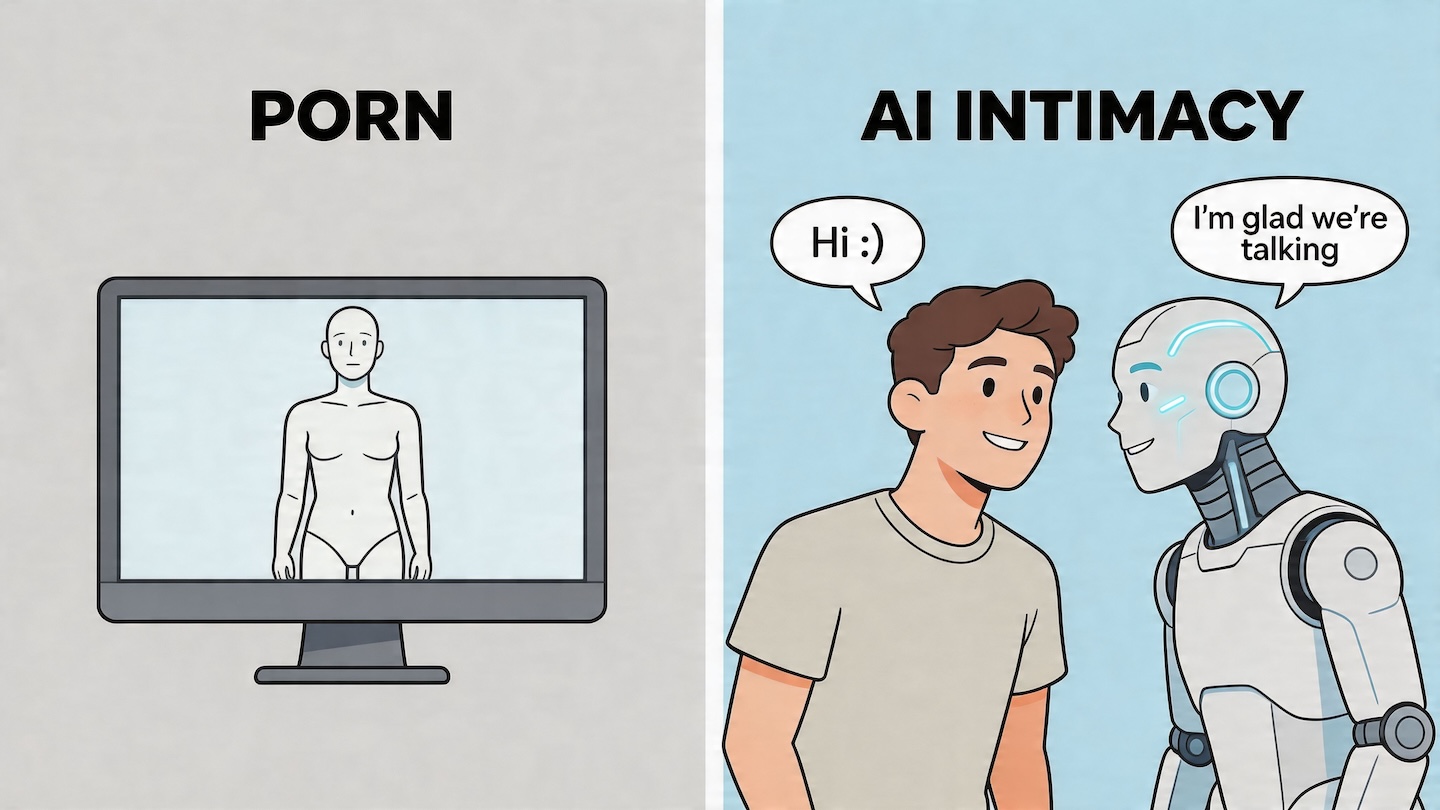
The biggest misunderstanding about no limit ai is that it's only about explicit content.
That's part of it for some users, obviously. But the main advantage is broader than that. Unrestricted conversation gives a character room to stay honest when the moment gets complicated.

Emotional weight needs space
A good AI conversation doesn't always move fast. Sometimes the entire point is hesitation, contradiction, or unresolved tension.
One real example from the no-limit companion space sticks with me. A user was working through a complicated dynamic with a character. It wasn't mainly explicit. It was emotionally loaded, awkward, and tense. On other platforms, the character would deflect, summarize, or try to wrap the scene up. On an unrestricted setup, the character stayed in that tension and let it breathe. The user said it was the first time an AI conversation felt like it had actual weight.
That's the difference. Not "more allowed content." Better pacing. Better honesty. Better presence.
If that hits close to home, this piece on not being weird for wanting that kind of connection gets at the emotional side without pretending users are stupid for caring.
What gets better when the limits come off
You can usually feel the improvement in a few areas right away:
- Character consistency: The bot stays itself instead of snapping into compliance voice.
- Narrative pacing: Scenes can build instead of rushing to a safe summary.
- Emotional realism: The conversation can hold discomfort, longing, jealousy, tenderness, or ambiguity without instantly defusing it.
- User honesty: You stop prompt-engineering around moderation and start talking normally.
A lot of people don't realize how much filtered platforms trained them to speak unnaturally until they use one that doesn't.
Here's a useful example of the difference in style and expectation:
It also makes roleplay less mechanical
When a system isn't trying to cut every risky branch off the tree, roleplay becomes more than transaction. It can turn playful, dark, romantic, obsessive, absurd, or slow without hitting the same generic loop.
That matters even if you never touch hardcore content. Users who want fantasy, anime dynamics, enemies-to-lovers tension, power imbalance, complicated comfort, or just a character with edge all benefit from the same thing. The AI has room to commit.
The best unrestricted chats don't feel unhinged. They feel uninterrupted.
Navigating Safety Privacy and Legal Rules
No limit ai doesn't mean no standards. If a platform says "anything goes" and leaves it there, that's not freedom. That's laziness.
Responsible unrestricted platforms separate user freedom from actual safety work. Those are different jobs.

What real safeguards look like
Good adult platforms don't rely on clumsy filters as a substitute for policy. They put basic guardrails in places that make sense.
That usually includes:
- Age verification: Adults only means adults only.
- Clear terms of service: Users should know what is and isn't allowed before they start.
- Hard limits on illegal content: This is mandatory.
- Visible enforcement: Rules have to mean something in practice.
The weak version of safety is over-moderating every chat turn because it's easier than building proper infrastructure. The stronger version is narrower but firmer. Let legal adult conversation happen, and block the categories that shouldn't exist on any platform.
Privacy matters more on adult platforms
This part gets overlooked, but it shouldn't.
People using companion AI often share fantasies, emotional vulnerabilities, relationship problems, identity questions, or private habits they'd never post publicly. If a platform can't explain how it handles that data, the unrestricted label stops being appealing.
There's an important technical distinction here. Unrestricted access is not the same as unrestricted licensing. Platforms can provide uncensored inference while still complying with data laws like GDPR by separating model generation from personal data logging, as explained in this discussion of unrestricted access, licensing, and compliance trade-offs.
What to look for before you trust a platform
A decent privacy standard should answer a few practical questions:
| Question | Why it matters |
|---|---|
| Is the privacy policy easy to find? | Hidden policies usually signal weak accountability |
| Are adult-use rules explicit? | Vague policies create inconsistent enforcement |
| Does the platform explain data handling clearly? | You should know what gets stored and why |
| Are safety limits specific? | Serious platforms define boundaries instead of hand-waving them |
If you want to see what a visible privacy baseline looks like in practice, review NoShame AI's privacy policy.
Safety doesn't come from interrupting every intense conversation. It comes from enforcing the right boundaries in the right places.
How to Choose Your No Limit AI Platform
Once you've used a few companion apps, the sales language stops working. You start looking for operational clues instead.
A solid no limit ai platform usually reveals itself fast. Not by saying "unfiltered" louder than everyone else, but by how it handles the boring stuff that shapes the experience.
Start with the conversation itself
Ask a simple question after ten minutes of chat. Does this feel alive, or am I doing all the work?
If the model keeps recycling phrases, flattening emotional beats, or missing obvious context, the platform isn't there yet. The best character art in the world won't save weak output.
A quick comparison process helps:
- Test a tense scenario. Not just flirtation. Add contradiction, silence, or emotional ambiguity.
- Push continuity. Refer back to earlier details and see if the character holds them.
- Change tempo. Switch from short banter to slower narrative and see whether the system adapts.
Watch the business model for hidden brakes
A lot of companion platforms don't filter aggressively, but they still limit you in other ways. Message caps, token drains, premium-only essentials, and pricing that gets murky once you're invested all create the same outcome. You stop relaxing into the conversation.
Look for these signs:
- Transparent pricing: You should know what you're paying for without decoding a game economy.
- Meaningful character depth: Not thousands of near-identical bots with different profile pictures.
- Platform stability: Long chats should feel normal, not like you're testing a beta.
- Plain-language policies: If safety and privacy rules are buried, expect surprises later.
Infrastructure tells the truth
Many users underestimate the gap between a fun demo and a serious product.
Cloud-based deployment matters because long, complex conversations take real compute. Local setups can give you more control, but they also demand substantial hardware. Text plus image generation can require 16GB+ VRAM for real-time performance, and cloud infrastructure is what helps platforms avoid mid-session interruptions, according to FlowHunt's overview of unrestricted AI chatbot infrastructure.
If you're comparing options, this list of Character.ai alternatives for unfiltered roleplay is useful as a starting map, especially if you're sorting through platforms with very different pricing and strengths.
What works in practice: choose the platform that feels steady during a long scene, not the one with the loudest homepage promise.
Your Conversation Should Not Have an Off-Switch
If you've been burned by filtered companion apps, you're probably not asking for more features anymore. You're asking for fewer interruptions.
That's what no limit ai comes down to. A character that doesn't panic. A platform that doesn't shorten every meaningful reply. A system that understands immersion is fragile, and once you break it, the user doesn't care how nice the interface looks.
Character.ai, Replika, Candy.ai, and Crushon.ai all have users who can get something out of them. But if your main goal is depth, continuity, and adult freedom without the usual handbrake, the standard has to be higher than "sometimes it works."
The useful test is simple. Can the conversation keep going when it matters most?
If the answer is no, it isn't companionship. It's a demo with boundaries you didn't agree to.
A good platform should let the character stay in the scene, keep the tone intact, and give the moment as much room as it needs. No fake shutdowns. No moral lecture in the middle of tension. No clipped ending because the system decided you've had enough.
That's the baseline adults should expect now.
If you're done with shallow characters, mid-chat refusals, and pricing that turns every scene into a meter, try NoShame AI. It's built for adults who want uncensored AI companionship that stays in the conversation.